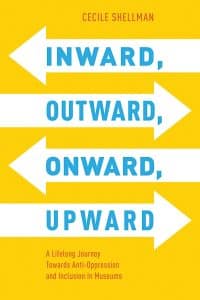
It has been a long time since we’ve visited our resource library and shared our thoughts on a book. Cecile Shellman’s Inward, Outward, Onward, Upward: A Lifelong Journey Towards Anti-Oppression and Inclusion in Museums feels like the perfect book to relaunch our reading and reviews. With so many conversations happening about DEIA, this book has something for everyone.
When we talk to people about DEIA in museums, we often hear two things; “everyone is welcome in our museum”, and/or “our community isn’t very diverse so we aren’t sure how this applies to us”. The beautiful thing about Shellman’s book is that she offers encouragement that every museum can see itself in; that we are all just trying to be welcoming, representative, and responsive organizations that serve our communities.
One of the book’s greatest strengths is its approachable tone. Written in a conversational, non-judgmental style, it invites readers at every stage of their equity, diversity, accessibility, and inclusion journey to participate without fear of “getting it wrong.” Shellman acknowledges that this work can be uncomfortable, but reminds readers that growth begins with a willingness to reflect and learn. Rather than presenting anti-oppression as a checklist or destination, she frames it as an ongoing journey of reflection, learning, and action.
The book is organized around the four stages reflected in the title. It begins by looking inward, encouraging readers to examine their own identities, assumptions, and biases. Through thoughtful reflection questions, Shellman invites readers to think about how personal experiences shape the way we interact with our professional colleagues, visitors, communities in general, and the collections we work with.
The focus then shifts outward, exploring how museums can either reinforce barriers or facilitate belonging. This section aligns beautifully with conversations we’ve been having about the healing potential of museums. Our heads immediately think about exhibits and programs, but Shellman expands the conversation by talking about workplace culture, decision-making, accessibility, partnerships, and relationships with communities. She reminds us that inclusion should not be thought of as its own special initiative or project; it impacts every aspect of our work.
Moving onward, the book encourages readers to translate reflection into action. Rather than giving a to do list, Shellman emphasizes the importance of listening and responding. Finally, the upward section reminds readers that anti-oppression, much like collections work, is never done. She circles back to the journey concept and encourages readers to stay humble and curious, and to ensure their museums are accountable and transparent.
One of the things I really love about this book is the reflective questions and practical exercises sprinkled throughout. These give the reader a chance to pause, ponder, discuss with colleagues, and think about how to apply what they are learning. They also make the book an excellent resource for staff and/or board meetings. The book lends itself very well to team-based learning.
Shellman also succeeds in making the work feel hopeful rather than overwhelming. As I mentioned at the beginning, sometimes people tell us that they aren’t sure where or how to start having conversations about inclusivity. Instead of focusing on large-scale initiatives, Shellman emphasizes thoughtful, incremental changes that build more welcoming and healing spaces over time. She recognizes that museums have limited resources and that everyone’s journey is going to be different.
Overall, this is a quick, engaging, and highly accessible read that encourages museums to approach anti-oppression with curiosity rather than fear. Whether read individually or as a team, it offers a thoughtful framework for museums to be inclusive, compassionate, and responsive to the people they serve.