One of the things we talk about in training sessions is how much can be learned from our professional past. That past informs where we are today and where we are going, so it is important to understand. When Do Museums Still Need Objects? was published in 2010, Steven Conn posed a provocative question that challenged museum professionals to reconsider the role of collections in an increasingly digital and experience-driven world. More than 15 years later, the question remains relevant, but the museum sector has evolved so dramatically that the book now reads as much as a history of museum thought as it does a contemporary critique. There’s a lot of value in that.
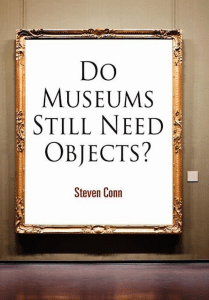 Conn traces the changing role of museum objects from the eighteenth century through the early twenty-first century. He argues that museums were once centres of research and knowledge creation, where collections were the primary means of understanding the world. As academic disciplines became more specialized and research shifted to universities, museums increasingly focused on education, interpretation, and visitor experience.
The book’s central question is intentionally provocative. Conn is not suggesting museums no longer need collections, but rather asking whether objects are the central focus that they once were. He explores how storytelling, exhibitions, architecture, and public programming have, in some cases, overtaken the collections.
Reading the book today requires some historical perspective. Since its publication in 2010 museums (and society) have undergone profound change. Conversations around reconciliation, decolonization, accessibility, community collaboration, and participatory practice have reshaped the profession. This was pre-COVID, and before movements like Black Lives Matter, Every Child Matters, Idle no More, and Me Too. It was before conversations about museum burnout and unhealthy work practices and expectations. As a result, some of Conn’s observations and conclusions can feel a bit dated. Rather than a commentary on today’s museums, the book offers a snapshot of where the profession stood at the beginning of the last decade.
That historical perspective is also the book’s greatest strength. Conn provides an engaging overview of how museums developed, why collecting became so important, and how institutional priorities shifted over time. Understanding this evolution helps explain many of the conversations museums continue to have about collections, public service, and relevance.
Even where readers may disagree with Conn’s conclusions, his questions remain worthwhile. Every museum needs to ask itself (and not just once!) what makes the museum unique? How can the collection serve communities? What is the appropriate balance of preservation, research, education and engagement?
While some arguments have not aged as well as others, this book is a fascinating read for anyone interested in the history of museum practice and how the profession continues to evolve.