2026 Conference Schedule
See detailed program descriptions & presenter biographies below.
See detailed program descriptions & presenter biographies below.
Participants are asked to please bring a laptop with them to this session.
Looking for a fresh, engaging way to raise funds while telling your museum’s story? This interactive pre-conference workshop introduces the concept of a museum gift catalogue—a fundraising tool inspired by the popular holiday catalogues. Instead of simply asking for donations, gift catalogues invite supporters to “purchase” meaningful contributions, such as conserving an object, sponsoring a school program, planting a heritage garden, or digitizing photographs.
Through collaborative exercises and group discussion, attendees will share inspiration, challenge one another to think beyond traditional fundraising approaches, and discover new ways to connect donors with the work museums do every day. Expect plenty of creativity, fun, and the reassurance that there are no bad ideas.
Drawing on ideas developed during the brainstorming session, each participant will leave with a catalogue that can be launched for the 2026 holiday giving season.
Karin Kierstead & Emilie Surette,
Association of Nova Scotia Museums
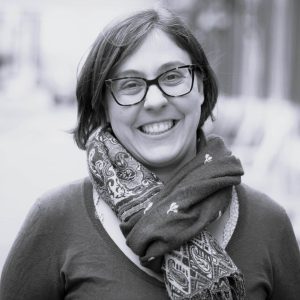

Karin Kierstead
Karin Kierstead is the Programs Manager for the Association of Nova Scotia Museums (ANSM) and has worked with museums and heritage organizations across four provinces for more than 25 years. She manages ANSM’s TRACK and internship programs, teaches the association’s Museum Fundamentals course, develops grant applications and partnership projects that advance ANSM’s Strategic Plan and ReconciliAction Plan, and continues to play a supporting role with the NovaMuse Co-operative. She also teaches the Public Humanities and Heritage Capstone course at Saint Mary’s University. Karin provides guidance and support to museums throughout Nova Scotia, helping them strengthen museological practice across all areas of their operations. An expert in information standards and collections management, Karin regularly advises heritage organizations across North America on collections databases and collaborative digital initiatives. She is the founder of an international discussion group for museum associations and government agencies that provide museum database services. Karin’s work on NovaMuse.ca earned ANSM the Canadian Museums Association Award of Outstanding Achievement in Management, and she is a recipient of the Queen Elizabeth Jubilee Medal for her work in the heritage sector.
Emilie Surette
Emilie Surette is the Programming and Outreach Coordinator at the Association of Nova Scotia Museums and holds both a BA in Film and Media and an MA in Screen Cultures and Curatorial Studies from Queen’s University as well as a graduate certificate in Museums and Cultural Management from Centennial College in Toronto. Emilie plays a supporting role in ANSM programs and initiatives and manages ANSM’s website, job board, and social media. Both in life and at work she is passionate about advocating for heritage organizations and she is excited for the opportunity to continue supporting their important work.
Join Museum of Industry staff, Andrew and Paul, for a tour of the museum and surrounding grounds. We will meet in the Foord Room at 10:00 AM. The tour will consist of about 1 hour inside and 30 minutes outside, including machine shop demonstrations.
You’re welcome to enjoy lunch at any of Stellarton’s restaurants only a short drive away.
Devin Casario, Association of Nova Scotia Museums
Claire MacDonald-Matthews, Museum of Industry
Tegan Rowlings, Musquodoboit Harbour Railway Museums
Heather Stevens, Millbrook Cultural and Heritage Centre
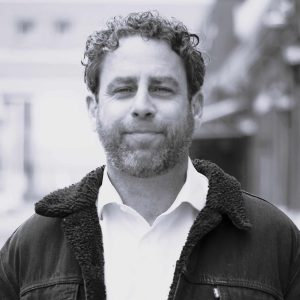

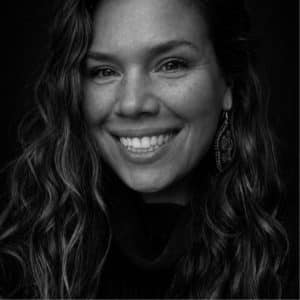
Devin Casario
Devin Casario is the Executive Director of ANSM and has worked in the creative industries/not-for-profit cultural sectors for 28 years, wearing a wide-variety of hats. In his spare time, he is a dedicated youth football coach. He eats shawarma daily and is blessed to have two great sons, Marcellus and Phoenix.
Claire MacDonald-Matthews
Claire MacDonald-Matthews is Manager of the Museum of Industry and the Balmoral Grist Mill. With a passion for history and heritage, she is committed to preserving the past while helping shape the future of these institutions. She oversees museum operations and strategic planning, drawing on experience gained through a career in museums across Manitoba, Ontario, and Nova Scotia. Claire holds a Master of Museum Studies from the University of Toronto and a Bachelor of Arts in Classics from Queen’s University.
Tegan Rowlings
Tegan Rowlings a proud steward of shared culture and heritage living on the Eastern Shore of Nova Scotia. She is Curator of the Musquodoboit Harbour Railway Museum, President of the Association of Nova Scotia Museums and was recently appointed to the Canadian Museum Association’s Advocacy subcommittee. Through this work, Tegan has specialized in connecting museums to community, advocating for the cultural and heritage sector from a hyper-local to national level, including public engagement, media relations, and working with senior-level bureaucrats to shape and advance cultural policy in Nova Scotia and beyond.
Heather Stevens
Heather, a Mi’kmaq woman, was born in Manchester, New Hampshire. She is the daughter of Mary Jane Stevens, the granddaughter of John Stevens (Millbrook First Nations), and the great niece of the former Grand Chief Donald Marshall. Heather was raised in Manchester until the age of 9 and then moved to Rutland, Vermont and lived there until 11 yrs. of age. Heather then moved to Millbrook First Nations and has lived here since. She has had many years with the Academic world and obtained a Degree, Diploma, and many Certificates. Within her Tourism and Hospitality schooling, she had obtained an academic scholarship. When she had finished her Tourism and Hospitality Diploma, she was hired full time at the Glooscap Heritage Centre and Mi’kmaq Museum as a Programs Assistant from 2012 to 2014. Over time, the role became Manager in 2015 of the Millbrook Cultural and Heritage Centre, which is located on the Millbrook First Nation Community in Nova Scotia. During her employment, she has gained National Recognition for not only the Heritage Centre, but for herself with the very first International Repatriation in Atlantic Canada of a Men’s Ceremonial Robe that was located in Melbourne, Australia since the mid 1800’s. The return had taken place at the end of March with the Regalia being at the Heritage Centre on April 2, 2023. The official reveal was on National Indigenous Peoples Day of 2023. In order to have the funding for this, Heather had to work very hard to obtain enough money to cover the costs of such a vast repatriation. Heather had reached out to Provincial and Federal funding as well as from the community. Most everything that is done for the Heritage Centre, Heather has to seek out funding, which for First Nations Heritage Centre is not an easy task. Heather is an advocate for the First Nations Museum and Heritage Centre for many years and will continue to do so for many more to come.
Take a time travel journey with Anita as she delves into our past, present and potential futures as museums in Nova Scotia. Using the beginnings of museums in the province as a starting point and the current environment as a foundation, Anita will explore future possibilities for our museums as they adjust to challenging times and changing societal needs.
Anita Price
Anita has 40+ years of experience working in the heritage field including community, municipal, provincial and federal museum and heritage organizations. She ‘retired’ in 2021 from her role as Executive Director at ANSM but has remained active in the heritage field undertaking a number of museum related projects as well as attending events and participating in training opportunities.
Refreshments will be available in the foyer.
Participants are asked to please bring a laptop with them to this session.
Museums know they make a difference—but demonstrating that impact in ways that resonate with funders, elected officials, and decision-makers can be challenging. Participants will learn how to communicate their museum’s economic, social, educational, and community value in ways that strengthen advocacy efforts and funding applications. By the end of the session, attendees will have completed a customized impact assessment that they can immediately use in grant applications, meetings with elected officials, strategic planning, annual reports, and community advocacy.
Dnyanesh Kamat, Canadian Museums Association
Dnyanesh Kamat is a policy and strategy professional in the creative and cultural industries (CCI). Prior to joining CMA, Dnyanesh worked on policy and strategy advisory at Portico Global, a Montreal- and Paris- based consultancy that advises governments in North America, the Middle East, and Asia on fostering growth in their CCI sectors. Dnyanesh has also worked in a senior policy and strategy role for a Government of Dubai agency where he helped craft policies to support the government’s long-term economic diversification and innovation plan. As senior manager of policy and research at CMA, Dnyanesh designs and leads research projects on a broad range of issues of interest to the museum and heritage community. He also supports the implementation of CMA’s policy and advocacy agenda by collaborating with his CMA colleagues. Dnyanesh strongly believes in centering decoloniality and reconciliation with Indigenous communities in the heritage sector. Dnyanesh has an MA in Foreign Affairs from the University of Virginia and a BA in Economics and International Relations from the College of William and Mary.
This session will explore how an initial archival inquiry grew into a broader community history project documenting the experiences of African Nova Scotian students who attended segregated schools in our area.
Participants will learn about the steps involved in developing the project, including archival research, community engagement, identifying and connecting with storytellers, and documenting first-person accounts. We will share both our successes and the challenges we encountered along the way, including the importance of building trust and creating respectful spaces for people to share their experiences.
This session demonstrates how one archival discovery can lead to a much larger community project—and how combining historical records with lived experiences can create a richer, more inclusive understanding of our shared history.
Joanne Boudreau, Fultz House Museum
Joanne Boudreau is the President of the Fultz Corner Restoration Society, a non-profit society that owns and manages Fultz House Museum. The Sackville Heritage Archives are also part of Fultz House Museum. Joanne has been involved with Fultz House for the past 12 years, serving in a variety of leadership roles on the board, including Secretary, Treasurer, Vice President, and now President. She is committed to engaging with the community and regularly attends community events as a representative of Fultz House Museum. Equity, diversity, inclusion, and accessibility are important aspects of her work and her vision for the museum. Joanne also served for four years as Treasurer on the Board of the Association of Nova Scotia Museums, stepping down from the position in June 2026. Following a 30-year career in healthcare administration, system implementation, project management, and management, Joanne brings a wealth of experience to her work in the museum and archives sector. After retiring, Joanne developed a passion for genealogy, which has become both a rewarding hobby and a natural extension of her involvement with local history and archives. She enjoys helping preserve and share the stories of the community and its people. Outside of her work with Fultz House Museum and her interest in genealogy, Joanne’s four grandchildren are a very important part of her life.

Sponsored by Coastal Nova Scotia
“Community Stores/Community Stories” looks at how markets and trade shape the character of life in Nova Scotia, past and present. Rooted in traditions of friendship and exchange, recalling retail spaces and experiences of the past, and pointing the way to a locally rooted, dynamic future, this exhibit looks at the outsized importance of these humble institutions.
Highlighting material from the provincial collection, offering interactive elements and opportunities for community collaboration, the “Community Stores/Community Stories” project invites all Nova Scotians to celebrate these shared spaces and the lives that they sustain. Roger & Erika explore the challenges and opportunities presented by collaborative engagement with local market partners, community museums, and across Nova Scotia Museum sites. There will also be opportunity for community museums and other potential partners to discuss hosting the travelling exhibit in the summer of 2028 and beyond.
Roger Marsters, Nova Scotia Museum
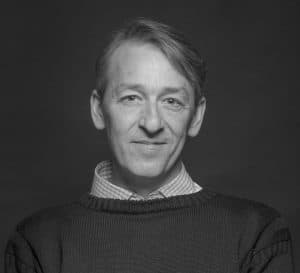
Roger Marsters
Senior Curator of Cultural History at the Nova Scotia Museum and Adjunct Professor with the Department of History at Dalhousie University. He is the author of several books and has curated and co-curated exhibitions for the Nova Scotia Museum, the Art Gallery of Nova Scotia, and other institutions, including “Cunard 175: Engine for Change” (2015), “North from Nova Scotia” (2016), “Collision in The Narrows: The 1917 Halifax Harbour Explosion” (2017), and “Ta’n me’j Tel-keknuo’ltiek: How Unique We Still Are” (2021). His curatorial work focuses on Nova Scotia’s cultural landscapes, past and present, and his current research focuses on the experience of walking in Mi’kma’ki/Nova Scotia.

Sponsored by the Canadian Heritage Information Network
The Canadian Heritage Information Network (CHIN) has been working on an ambitious project to modernize Artefacts Canada, the national portal for museum collections, and we’re excited to talk to you about it! Nicholas will provide a brief overview of the project, what our primary goals are, the work we’ve done so far, our prospective timeline, partnerships, and next steps. While we are only at the beginning of this multi-year project, we’re eager to hear from museums and museum professionals in Nova Scotia to learn about your interests, needs, and concerns in relation to the new portal.
Nicholas Lobraico, Canadian Heritage Information Network

Nicholas Lobraico has been a Heritage Information Analyst at CHIN since 2023. His work includes research on the web presence of museum collections in Canada and leading CHIN’s work on digital preservation. More recently he has taken on the role of partnership development for the project to modernize Artefacts Canada. He holds a Master of Information Studies from McGill University as well as a Master of Political Science and a Bachelor of Humanities from Carleton University.

Sponsored by Nova Scotia Museum
The Maritime Museum of the Atlantic’s Boat School demonstrates how museums can move beyond interpretation to become active sites of learning, mentorship, and community building. Attendees will leave with practical ideas for developing skills-based programming that strengthens community connections, fosters safe and supportive learning environments, and creates meaningful heritage experiences. Attention will be paid to how hands-on heritage skills programming can support accessibility, healthy communities, and deeper public engagement with museums.
Kim Reinhardt, Maritime Museum of the Atlantic
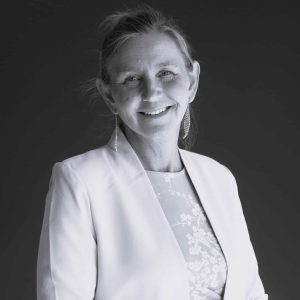
Kim Reinhardt is General Manager of the Maritime Museum of the Atlantic in Halifax. She oversees museum operations, programs, and community engagement initiatives that connect diverse audiences with Nova Scotia’s rich maritime heritage. Through initiatives such as the Museum’s Boat School, Kim has worked to expand opportunities for hands-on learning, skills development, and meaningful public participation in heritage preservation.
Participants can check into their hotels and break before rejoining for our evening activities.
Join us in the Foord Room and Courtyard for refreshments, light snacks, and entertainment. An open mic will be available for anyone who would like to share a story or two about their experiences with ANSM over the past 50 years.
Sponsored by Support4Culture
Dinner is served at 7:00 PM in the Samson Gallery. Enjoy a delicious catered meal, including CAKE!
Can your team win the trivia trophy from previous champion, Museum of Industry? It might be time to brush up on some history of the past 50 years… Join us at the Blue Lobster Public House for some social time!
Ministerial Assistant Danny MacGillivray will bring greetings on behalf of The Honourable Dave Ritcey, Minister of Communities, Culture, Tourism and Heritage and Gaelic Affairs.
Starting a career or volunteer position in museums? Are you currently succession planning and interested in recruiting new staff and/or volunteers? Looking to meet someone new in the museum community? Do you have knowledge to share about building a career in museums? Interested in learning about how to get involved? Looking for new friends? We invite you to drop by the museum meet & greet for great conversation!
Sandi Stewart

Sandi Stewart is a PhD History Candidate at the University of New Brunswick (Saint John). Her research examines women’s labour, art, and craft from the Atlantic World and how it was displayed, interpreted, and awarded at provincial and international exhibitions, circa 1850-1930. Sandi completed a M.A. and B.A. in Folklore from Memorial University. She currently volunteers as Recording Secretary on the Nova Scotia Women’s History Society Board of Directors and on the publications committee for The Oar: New Brunswick’s History Magazine for the York-Sunbury Historical Society (Fredericton Region Museum).
Overwhelmed by the topic of Artificial Intelligence? It can be difficult to break through the noise and answer key questions like: What does the term Artificial Intelligence mean? How is it created? How can you learn to spot AI generated content? What are some of the key challenges of AI use in heritage specifically?
Anna will provide a foundation for people to better understand AI, whether they are a beginner or someone hoping to build upon their current understanding. This conversation will focus on current examples that centre the relationship between heritage and AI.
Anna Sorensen
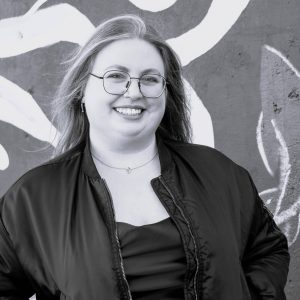
Anna Sorensen (she/her) is a recent Memorial University graduate, bringing a wide range of professional and volunteer experience in museum operations, archival work, local arts programming, and historical research to her work. In her career and life she is passionate about the preservation of Newfoundland and Labrador’s heritage and culture, especially when highlighting the underrepresented voices of our shared past, present, and future. She has also begun to develop information sessions that aim to help contextualize technology use in local heritage programming. Anna is excited to continue developing her knowledge base and skill-set in the community, while making arts and heritage accessible to everyone.

Sponsored by Know History
This workshop will explore practical approaches to building authentic relationships with communities before projects begin. Participants will work together to identify common challenges, analyze engagement scenarios, and develop strategies that can be adapted to organizations of any size. The workshop encourages participants to share experiences, learn from one another, and leave with ideas they can apply in their own institutions.
Vanessa Campoli – Williston, Know History

Vanessa Campoli – Williston is an Interpretive Planner who specializes in community-centred engagement and collaborative storytelling. Throughout her career, Vanessa has built meaningful relationships with Nations, communities, municipalities, heritage organizations, cultural institutions and local stakeholders across Canada, helping transform community knowledge into exhibitions and public programming. Passionate about creating environments where communities feel heard and empowered, she believes the strongest museum experiences are built through trust. Vanessa focuses on connecting people, fostering partnerships, and finding ways for museums to become catalysts for community belonging.
Refreshments and snacks will be available in the Samson Gallery.
Sponsored by the Army Museum Halifax Citadel
Who knows what war cake is? This humble yet delicious Maritime tradition—made with raisins, molasses, and a sense of warmth—emerged during a time of scarcity. Although the war ended and rationing disappeared, war cake endured. Today, it remains a symbol of resilience, resourcefulness, and connection—still served in Maritime homes, often alongside a hot beverage and good conversation.
Museums today are navigating a similar moment of austerity. Financial pressures, staffing challenges, and evolving expectations require creativity and adaptation. This interactive session invites participants into a reflective and shared conversation about creativity in constraint. Participants’ shared experience and creative thinking will explore how working within limitations can lead to innovation, strengthen community connections, and produce lasting positive change.
Maggie MacIntyre, Nova Scotia Museum
Maggie is currently Manager of Rural Sites for the Nova Scotia Museum. She has worked in many aspects of museum operations – frontlines, interpretation, collections, and management. Her passion is the power of museums for change, especially in local community. Maggie served as Executive Director for the Association of Nova Scotia Museums for 2 years and is currently on the Canadian Museum Association Board of Directors. Maggie lives in HRM with her young daughter and husband. She is one of Atlantic Canada’s oldest competing highland dancers.
What do you do when your museum inherits an old project? Start from scratch – or get creative and see what you can make with it? Join ANSM for a look at the Made in Nova Scotia database, a research project that began in the 1980s and is now being refreshed. Like a treasured family recipe, the original project contained valuable ingredients, but it also had some gaps. ANSM is working with communities, students, researchers and partners to add new ingredients and bring previously overlooked makers into the mix. Come explore how an inherited project can become something fresh, useful, and deliciously relevant. You’ll leave with ideas for reviving your own museum’s “family recipes” – from old databases and research files to exhibits and oral histories – and turning yesterday’s projects into tomorrow’s opportunities.
Alyssa Giles & Karin Kierstead, Association of Nova Scotia Museums
Alyssa Giles
Alyssa has had many roles in the museum sector throughout her career, including interpreter, archivist, educator, and Jill-of-all-trades. Through this work, she experienced firsthand the opportunities and challenges faced by government-run heritage sites, large science centres, and non-profit community museums across Newfoundland, Ontario, and Nova Scotia. As ANSM’s Museum Services Coordinator, she provides support, professional development opportunities, and resources to ANSM’s NovaMuse Co-operative members in the areas of collections management, educational programming, interpretation, and reconciliation. Drawing on her background in animal science and agriculture, she enjoys helping museums realize the potential in making information engaging and accessible from many alternative angles.
Karin Kierstead
Karin Kierstead is the Programs Manager for the Association of Nova Scotia Museums (ANSM) and has worked with museums and heritage organizations across four provinces for more than 25 years. She manages ANSM’s TRACK and internship programs, teaches the association’s Museum Fundamentals course, develops grant applications and partnership projects that advance ANSM’s Strategic Plan and ReconciliAction Plan, and continues to play a supporting role with the NovaMuse Co-operative. She also teaches the Public Humanities and Heritage Capstone course at Saint Mary’s University. Karin provides guidance and support to museums throughout Nova Scotia, helping them strengthen museological practice across all areas of their operations. An expert in information standards and collections management, Karin regularly advises heritage organizations across North America on collections databases and collaborative digital initiatives. She is the founder of an international discussion group for museum associations and government agencies that provide museum database services. Karin’s work on NovaMuse.ca earned ANSM the Canadian Museums Association Award of Outstanding Achievement in Management, and she is a recipient of the Queen Elizabeth Jubilee Medal for her work in the heritage sector.
Sponsored by Antigonish Tourism Association
With the goal of increasing community engagement in exhibition planning and production, a workshop was designed to teach nonspecialists some of the basics of co-curatorial design and production. Catherine & Donna completed a workshop in preparation for planning an exhibition of children’s art in a first floor reading room at the Angus L. MacDonald Library at St. Francis Xavier University. The exhibit, entitled The children, they are thought of, still, included two different works of art created by children involved in the project: a painted message using komqwejwi’kasikl symbols that were hung together in a mural, and a mixed-media artwork and caption about a special memory in nature. This presentation expands upon the methodological question of how to sustainably increase engagement in cultural activities in rural areas where little formal infrastructure and few human resources exist.
Donna Trembinski & Catherine Girard, St. Francis Xavier University
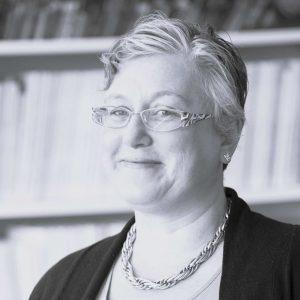
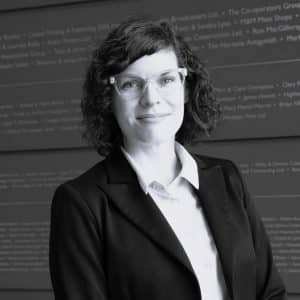
Catherine Girard
Catherine Girard is an award-winning teacher whose research focuses on eighteenth- and nineteenth- century art, using deep materiality and critical theory to study the visual and material cultures of hunting, contact, and difference in France and in the North Atlantic world. She was the principal investigator of two SSHRC-funded projects that focus on methods of reconciliation in the archive and on making art more accessible in rural areas. She publishes widely on Rococo art, the history of material cultures of Indigenous-settler relations, museum studies, and questions of visual literacy.
Donna Trembinski
Donna Trembinski’s research is focused at the intersection of religion, medicine, and disability. An award-winning researcher and author in medieval studies, it was Dr. Trembinski’s collaborative and community-engaged teaching strategies that brought her into an enjoyable and productive collaboration with Catherine Girard on a project exploring ways to make art more accessible in rural contexts like Antigonish. She is currently the president of the Canadian Society of Medievalists and the Senior Editor of the Journal of the Canadian Historical Association.

Sponsored by the Canadian Museum of Immigration at Pier 21
Heritage organizations across Nova Scotia are facing increasing pressures to diversify revenue, strengthen community engagement, encourage volunteers, attract new audiences, and ensure long-term organizational sustainability. While milestone anniversaries often celebrate an organization’s past, they also present unique opportunities to build momentum for the future. Drawing on recent strategic planning and fundraising work, Eleanor will examine how anniversaries can serve as catalysts for organizational renewal rather than simply commemorative events. By sharing practical experiences from two heritage organizations at significant milestones in their histories, Eleanor will demonstrate how strategic membership development, diversified fundraising, storytelling, and community engagement can contribute to long-term organizational sustainability.
Eleanor L. Anderson, PhD
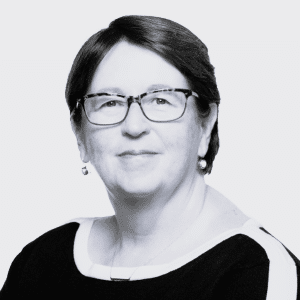
Eleanor L. Anderson, PhD, Principal of Tenfold Communications has more than three decades of experience helping community, heritage, cultural, and tourism organizations strengthen governance, increase community engagement, diversify revenue, and build organizational sustainability. A former founding member and Education Chair of the Cape Breton Chapter of the Association of Fundraising Professionals (AFP), she has led strategic planning, fundraising, membership development, and communications initiatives for organizations including the Fortress of Louisbourg Association, the Old Sydney Society, Celtic Colours International Festival, the Cove Guest Home Foundation and numerous not-for-profit organizations. Her work focuses on building practical, community-centered strategies that strengthen organizations through meaningful partnerships, engaged membership, diversified fundraising, and authentic storytelling. She is passionate about helping heritage organizations preserve the past while building resilient organizations for the future.
Michelle offers a look at a pilot program launched in the winter of 2026 in partnership with St. Mary’s Education Centre in Sherbrooke, Nova Scotia. Following a focus group meeting with educators from the local school the previous year, a grade 4/5 class was approached about participating in a youth interpreter program. The result was a 3-5 month program combining in the classroom cumulative educational sessions to support the final project – the students interpreting historic spaces to the visiting public with support from staff. Looking to build relationships with school and community, this program supported hard and soft skills development for students, facilitated inter-generational learning and engagement while supporting youth with learning disabilities.
Michelle will take attendees through the history and structure of the program, while offering insights on its strengths and weaknesses.
Dr. Michelle Clarabut, Sherbrooke Village
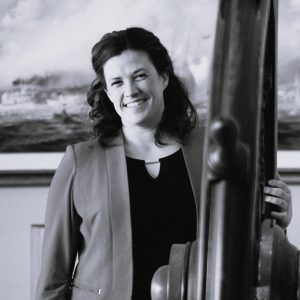
Dr. Michelle Clarabut is the Director of Interpretation with Sherbrooke Village, managing the Hands-on-History program, Agriculture and Farm program along with numerous other projects. She was previously the Programs and Communications Manager with the Great Lakes Museum in Kingston, Ontario and has a background in research, education and advancement. At the Great Lakes Museum, Michelle transitioned the Museum’s visitor experience and programs from a small storefront operation to the larger Museum it is today – doubling engagement numbers in the process. Her last project involved launching the visitor experience aboard the S.S. Keewatin, a 1907 built Edwardian-era Great Lakes passenger steamship. She holds a Bachelor of Arts Honours degree from Queen’s University in Art History and Italian, a Master of Arts degree from the University of Guelph in European Studies and a Doctorate in Cultural History from Royal Holloway, University of London. Michelle is on the Board of Coastal Nova Scotia, Historic Sherbrooke Village Development Society and is Chair of the St Mary’s Horse and Farm Club. She has previously volunteered on the Board of the Navy League of Canada, Kingston Branch and with the Kingston Association of Museums, Art Galleries and Historic Sites as Chair of the Marketing Committee. She has been involved with numerous research and public engagement initiatives; including workshops and conferences, exhibits and activities aimed at connecting people with the cultural heritage of Kingston.
Lunch will be served buffet style, with an assortment of sandwiches and salads to choose from.
While African Nova Scotian communities have preserved their history for generations through oral traditions, family records, churches, and community organizations, the province’s museum landscape looked very different until only a few decades ago. Communities have increasingly taken ownership of preserving and interpreting their own unique histories, resulting in the establishment and expansion of institutions that celebrate distinct chapters of the African Nova Scotian experience. This expansion has increased opportunities for collaboration, research, travelling exhibitions, educational programming, digital collections, and community partnerships. This panel will examine this remarkable evolution, from a time when one institution carried much of the responsibility for preserving Black history in Nova Scotia to today’s growing network of museums and cultural organizations and explore how collaboration, innovation, and community leadership can shape the next generation of Black heritage preservation.
Moderator:
Russell Grosse, Black Cultural Centre for Nova Scotia
Panelists:
Dr. Lynn Jones, Historian
Crystal Mulder, Halifax Library Archivist
Juanita Peters, Africville Museum
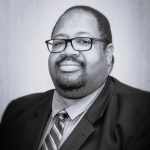
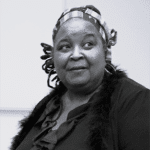


Russell Grosse
Russell Grosse is the Chief Executive Officer of the Black Cultural Centre for Nova Scotia, Canada’s oldest Black cultural centre. A respected leader in community development, heritage preservation, and organizational transformation, he has spent more than three decades working across the public, non-profit, and cultural sectors. Since joining the Black Cultural Centre, Russell has led efforts to strengthen the organization’s sustainability, expand community partnerships, enhance visitor experiences, and position the Centre as a leading voice in preserving and promoting African Nova Scotian history and culture. His work focuses on connecting heritage with contemporary community needs while ensuring that Black stories remain visible, relevant, and accessible to future generations. Drawing on extensive experience in leadership, governance, strategic planning, and community engagement, Russell brings a unique perspective on the evolving role of museums and cultural institutions in addressing social change, fostering inclusion, and preserving collective memory.
Dr. Lynn Jones
Dr. Lynn Jones, an African Canadian from Nova Scotia with ancestral roots dating back 400 years, carries a legacy as a prominent activist, educator, archivist, trade unionist and equity advisor. She was the first person of African ancestry elected to the executive ranks of the Canadian Labour Congress, the largest labour body in Canada and the first person to found and chair the Global Afrikan Congress, Nova Scotia Chapter where she has worked long and tirelessly raising the awareness of Reparations to declare Slavery of African People a crime against humanity which requires compensation and restitution. Lynn co-founded Nova Scotia’s first community land trusts to create affordable housing in Truro, Nova Scotia for Black residents affected by racism and gentrification. The Lynn Jones African Canadian & Diaspora Heritage Collection housed at St Mary’s University holds over 15,000 items documenting over 50 years of African Canadian history. She is the recipient of the Order of Canada and holds two honorary doctorates.
Crystal Mulder
Crystal is a 7th generation African Nova Scotian with roots tracing as far back as the Black Loyalists as well as the War of 1812 Refugees. As a child of the soil with deep roots, Crystal calls the community of Lake Loon/Cherry Brook home, a place where multiple generations of her family immediate and extended still reside. A historian by training and inclination, Crystal holds a Bachelor of Arts degree in History from St. Mary’s University and Masters in Education from Mount St. Vincent University. She has worked on research projects for the Department of Canadian Heritage; the Task Force on Government Services to the Black Community. Crystal has been an employee of the Halifax Public Library for 32 years. She is instrumental in the design and implementation of African Heritage Month programming at the Halifax Public Library. Currently, Crystal has taken on the role of African Nova Scotian Community Specialists for Halifax Public Library. Her duties entail working with the African Nova Scotian community to strengthen current partnerships and to develop new partnerships with the African Nova Scotian communities within HRM. Crystal’s community involvement include being the Co-Chair of the Black History Month Association, Member of the Board of Directors for the Lake Loon/CherryBrook, Development Association, and member of the Provincial African Heritage Month Planning Committee and Crystal is also a member of the African Nova Scotian Road to Economic Prosperity Advisory Council.
Juanita Peters
Juanita Peters is an award-winning filmmaker, playwright, actor, director, curator, and arts leader who currently serves as Executive Director and Curator of the Africville Museum. A passionate advocate for preserving and sharing African Nova Scotian history, she has led the development of exhibitions, educational initiatives, and community programming that connect Africville’s legacy to broader conversations about social justice, reconciliation, and cultural identity. Through her work in film, theatre, and museum leadership, Peters has become one of Nova Scotia’s leading voices in community-based storytelling and public history.
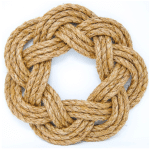
One of the workshops that the Fisheries Museum of the Atlantic holds during its community season is the Sailors Rope Wreath. The wreath is a flattened Turks Head knot that has been tied for centuries always for the purpose to be decorative. Come join us at the ANSM conference to make your decorative sailors rope wreath, garnished with some fall motif ribbon while also learning some of our secret ingredients to making C.A.K.E.
Rose-Anne Smeltzer, Fisheries Museum of the Atlantic
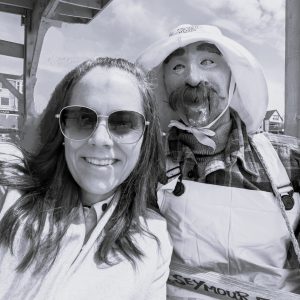
Rose-Anne began working at the Fisheries Museum of the Atlantic in 2021. A background in history and adult education has equipped her with valuable skills that enhance her work in interpretation. Her family history in the fishery and on Sable Island, helps her create meaningful connections with visitors. Rose-Anne strives to enhance visitor experiences with custom school programming, maintaining and developing partnerships, community engagement, and staff mentoring.
In Newfoundland, a “Mug Up” is a traditional phrase for a get-together over a cup of tea, whether on the beach, in the woods, or in your kitchen. A Memory Mug Up is an informal story sharing session for community members, where people gather, have a cup of tea, and share memories. For several years, Heritage NL has been utilizing funding through the federal New Horizons for Seniors program to run Memory Mug Ups and other senior-led and senior-focused programs including the Oral History Roadshow, Yarns and Yarns, Seniors Storytelling, and Supporting Healthy Aging through Rug Making. Folklorist and Heritage NL Executive Director Dale Jarvis will describe how these projects engage seniors and support their social, mental and physical wellbeing, while at the same time promoting pride in community history and traditional cultural activities. You might even get a peek inside Nan and Pop’s Cookbook – their current travelling foodways workshop!
Dale Jarvis, Heritage NL
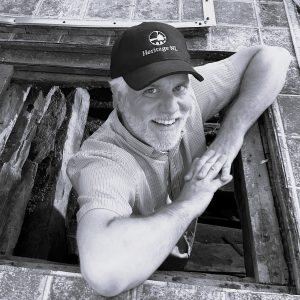
Folklorist and author Dale Jarvis is the Executive Director of Heritage NL, helping communities to safeguard living heritage and historic places. Dale has been working for Heritage NL since 1996, and holds a BSc in Anthropology/Archaeology from Trent University, and a MA in Folklore from Memorial University. He has served on the UNESCO Consultative Body to the Intergovernmental Committee for the Safeguarding of the Intangible Cultural Heritage and regularly teaches workshops on oral history, cultural documentation, and public folklore. He’s also been known to tell a tall tale or two.
Sponsored by The Kalaman Group
Chéticamp-style rug hooking is a distinctive Acadian textile tradition from Cape Breton, Nova Scotia, that serves as a living archive of regional history, artistic expression, and community resilience. In recent years, workshops, mentorship initiatives, and collaborative community spaces have further strengthened this process of knowledge transmission between youth, adults and seniors. This presentation examines how embodied practice, intergenerational mentorship, and adaptive teaching approaches contribute to the preservation and continuity of Chéticamp-style rug hooking. The transmission of rug hooking knowledge not only conserves technical competencies but also sustains social relationships, regional pride and Acadian cultural expression. Ultimately, this case study illustrates how hands-on folk practices offer effective models for preserving cultural knowledge through lived, creative engagement.
Betty Ann Cormier, Les Trois Pignons Centre Culturel
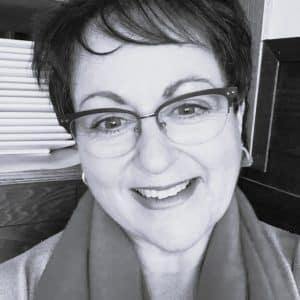
Betty Ann is a fourth-generation Chéticamp rug hooker whose passion for the craft began at the age of six under the guidance of her mother. By twelve, she was already selling her creations. In her early years, she worked with traditional patterns and colors, but her artistic journey has since evolved. Today, she designs her own patterns as she hooks, incorporates vibrant colors, and allows her hook to serve as her pencil or paintbrush. Fully engaged in every stage of the rug-hooking process, Betty Ann approaches each piece as a unique work of art. She no longer reproduces any of her work. Following a 37-year career in Social Work, she is now retired and devotes her time to learning, creating, and sharing her expertise in rug hooking. She is currently pursuing a PhD in Ethnology and Heritage at Université Laval, with a focus on preserving and advancing this cultural Acadian tradition. She has been teaching the art of rug hooking for fifteen years. Deeply committed to sustaining the cottage industry, Betty Ann actively promotes Chéticamp rug hooking by recruiting and mentoring new artisans in the style.
Refreshments and light snacks will be available in the Samson Gallery.
Devin Casario, Alyssa Giles, Karin Kierstead, & Emilie Surette, Association of Nova Scotia Museums